For the press
If you are looking for a background expert or interviewee on privacy topics, everything you need is here. I regularly give interviews to radio, television, and print media, and I try to respond quickly.
What I am happy to comment on
- Face recognition and camera surveillance — what a system actually sees, the difference between recognition and identification, and where the boundaries are
- Anonymisation and de-anonymisation — when an anonymised dataset really protects, and when it can still be traced back to individuals. Why deleting names is not enough, and what this means in practice for health, mobility, or published public data
- Web tracking and fingerprinting — how users are recognised without cookies, even across browsers
- Risks and side effects of artificial intelligence — what a model knows about us, what it reveals, and what to watch out for in daily use
- Algorithmic decisions and responsibility — credit scoring, insurance, job search, law enforcement, healthcare: more and more areas rank people using opaque models. Who is responsible for erroneous or discriminatory decisions, and is it possible to appeal an algorithm's judgement at all
- AI promises, predictions, and reality — what an AI system can do today, and what is just being sold to us. Where the real limits of current technology are, how well-founded the announcements about AGI and breakthroughs within a few years are, and what to ask when such news arrives
- AI and the future of work — does AI automate tasks or entire jobs? What real data shows so far, who the winners and losers are, and how realistic the scenario of major changes within a few years is. What is worth teaching our children about this
If the topic is borderline, feel free to contact me anyway: if it is not my field, I will say so, and if I can, I will recommend someone more knowledgeable.
About me
Gábor György Gulyás has worked on the technical aspects of privacy since 2005, alternating between research and the market. He is the managing director of Vitarex Studio, where he leads the VeriDome project: a pseudonymised face recognition procedure and the video analysis system built on it. Between 2017 and 2022, he led the device fingerprinting research and development team at SEON, and previously worked as a researcher at the Budapest University of Technology and Economics and the French Inria research institute. He wrote his doctoral dissertation on de-anonymisation in 2015, and his scientific publications have received 542 citations so far. With his colleagues, he was the first to propose the concept of browser-independent device identification, and one of their studies was presented in the European Parliament.
This text may be freely used in a professional context, without separate permission, provided the author's reputation is not harmed.
Photo
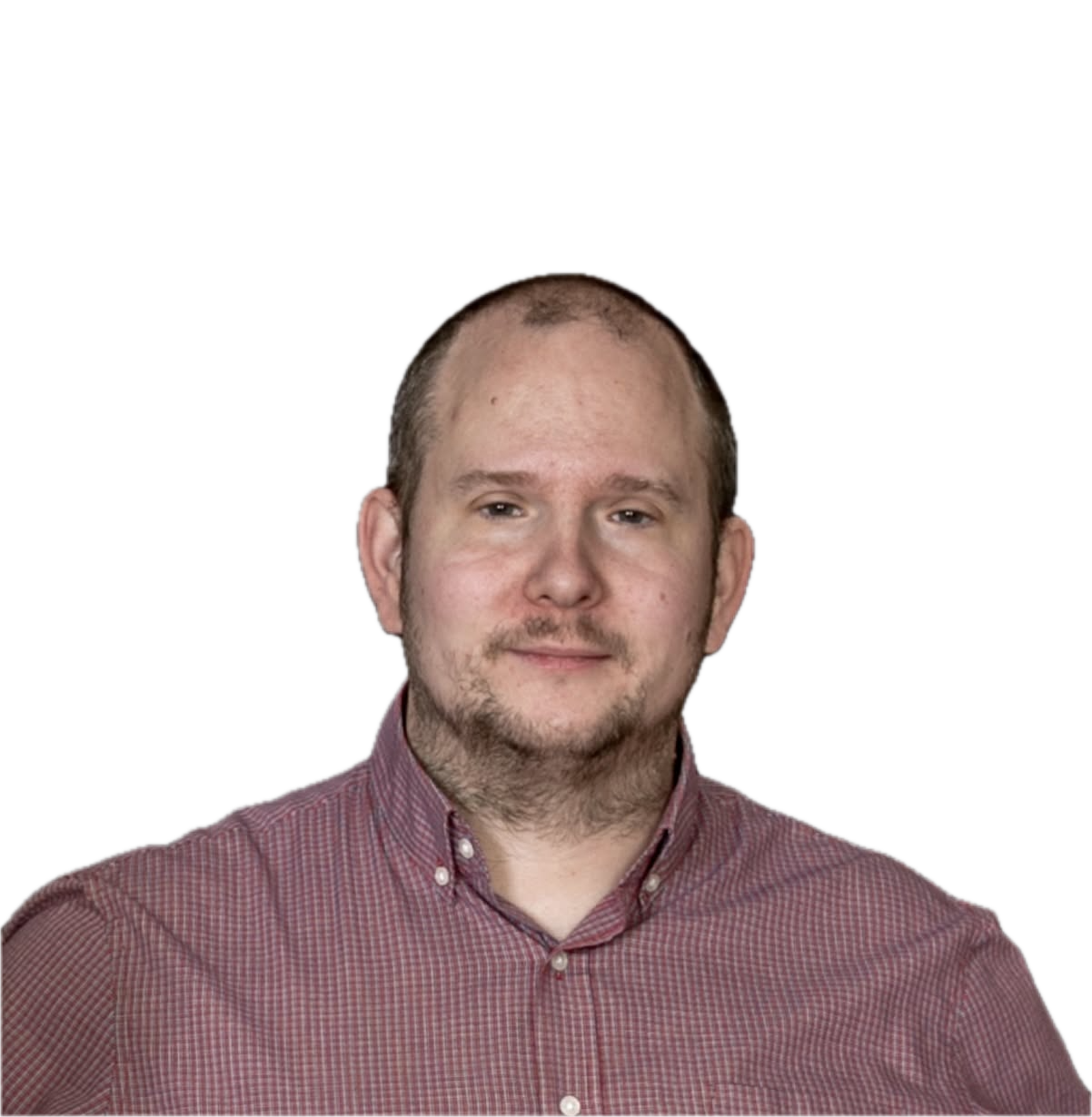
May be freely used in a professional context, with my name indicated and without harming my reputation. If you need a different format or resolution, let me know.
Contact
E-mail: hello@gulyas.info
Phone: +36 70 611 06, then 4×2, and 2×4
The last two digits of the phone number are intentionally a puzzle — because of harvesting robots. Sorry for the extra second it takes.
Before deadline, I am most quickly reachable by phone.
These contact details are also available on the Contact page.
Previous appearances
Selection. Press coverage before 2015 is fully available on the PET Portal press page — that archive is thorough, but no longer maintained.
- RTL Klub, interview about face recognition (2025)
- Kossuth Rádió, Szonda — radio interview (2014)
- Gépezet — one-hour radio interview about the state of privacy at the time (2015)
- BME, "We pay for free internet services with our personal data" (2014)
- Műhely magazin, interview (2014)
- HVG, Háló supplement — interview about PET Portal, with Iván Székely (2008)
- MTV1, Info-generáció — interviews (2007, 2008)
For years I was a regular guest on Kossuth Radio and Hit Radio.
My own writings — including articles published in Hetek — are on the Writings page.
If you want to look deeper
On the Research page you’ll find publications, on the Talks page conference and seminar talks, and on the Projects page public experiments — including the de-anonymisation simulator, which you can try in your browser.